Turn More Filtration Calls Into Booked Jobs This Week
Many plumbing companies are leaking money on water filtration calls without even seeing it. High-ticket jobs are going to the shop down the road because calls get missed, rushed, or handed to a generic answering service that treats everything like a clogged toilet.
AI answering for plumbing leads is a simple idea. It is a script-driven, always-on virtual agent that talks like your office, follows your rules, and is trained to qualify, schedule, and route water filtration prospects. It is not just there to say, "Someone will call you back."
In this playbook, we are going to walk through how to design AI call flows built just for water filtration and treatment, how to keep them compliant, and how to plug them into your dispatch and CRM. We will also break down when AI should answer live and when it should only handle follow-up, especially during busy summer weeks and big water quality news cycles.
Why AI Answering Is Different for Water Filtration Calls
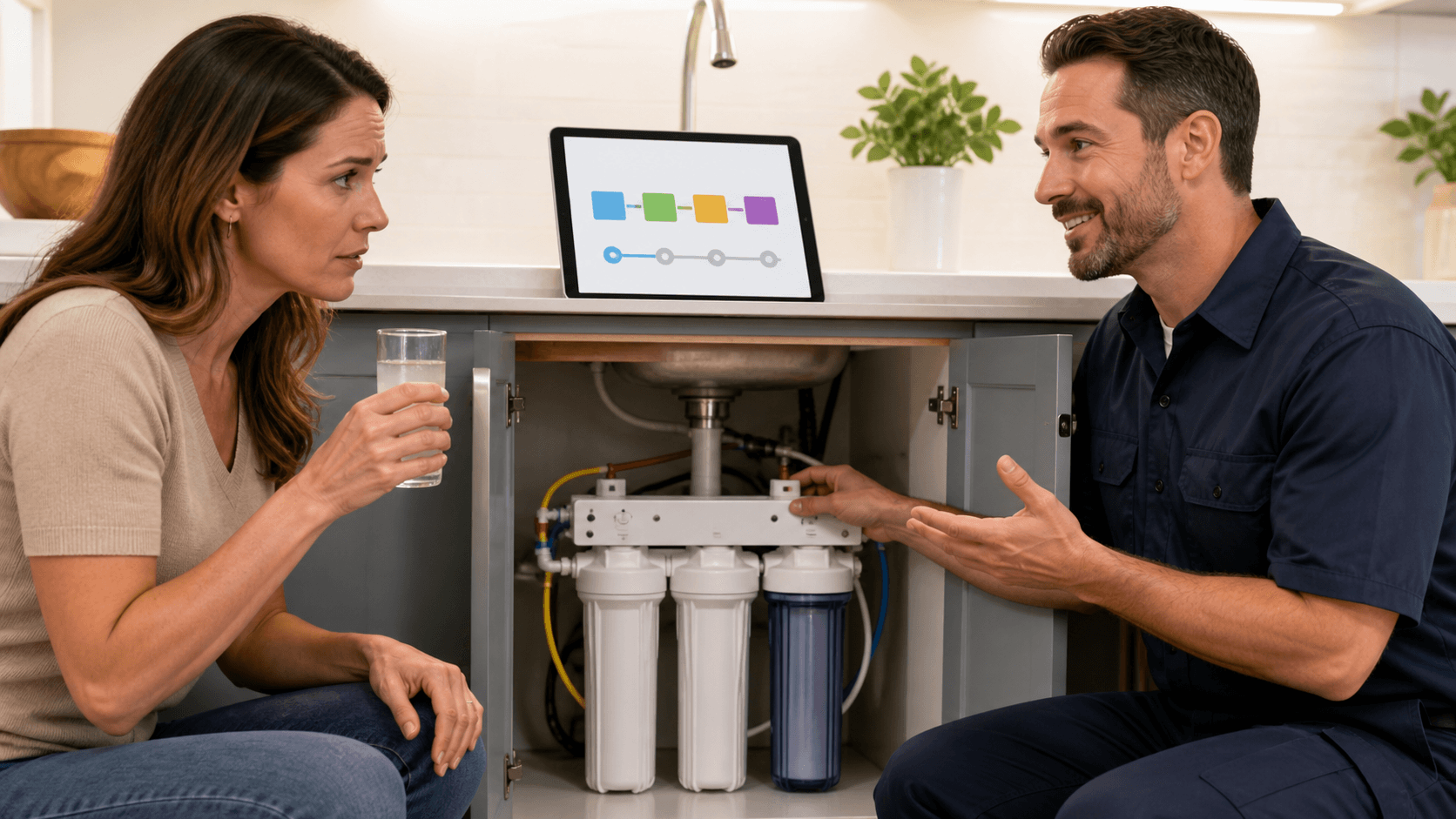
Water filtration and treatment calls are not like basic drain or leaky faucet calls. Homeowners are worried about what they and their kids are drinking. They ask about taste, smell, staining, brand names, and if their water is safe. These calls often lead to bigger tickets and longer conversations.
During hot summer months across many parts of the U.S., we see spikes in:
- Calls about bad taste or odor as water warms up
- Questions triggered by PFAS and other contamination headlines
- Well issues after heavy use or storms
- Concerns about dry skin, scale, and cloudy dishes
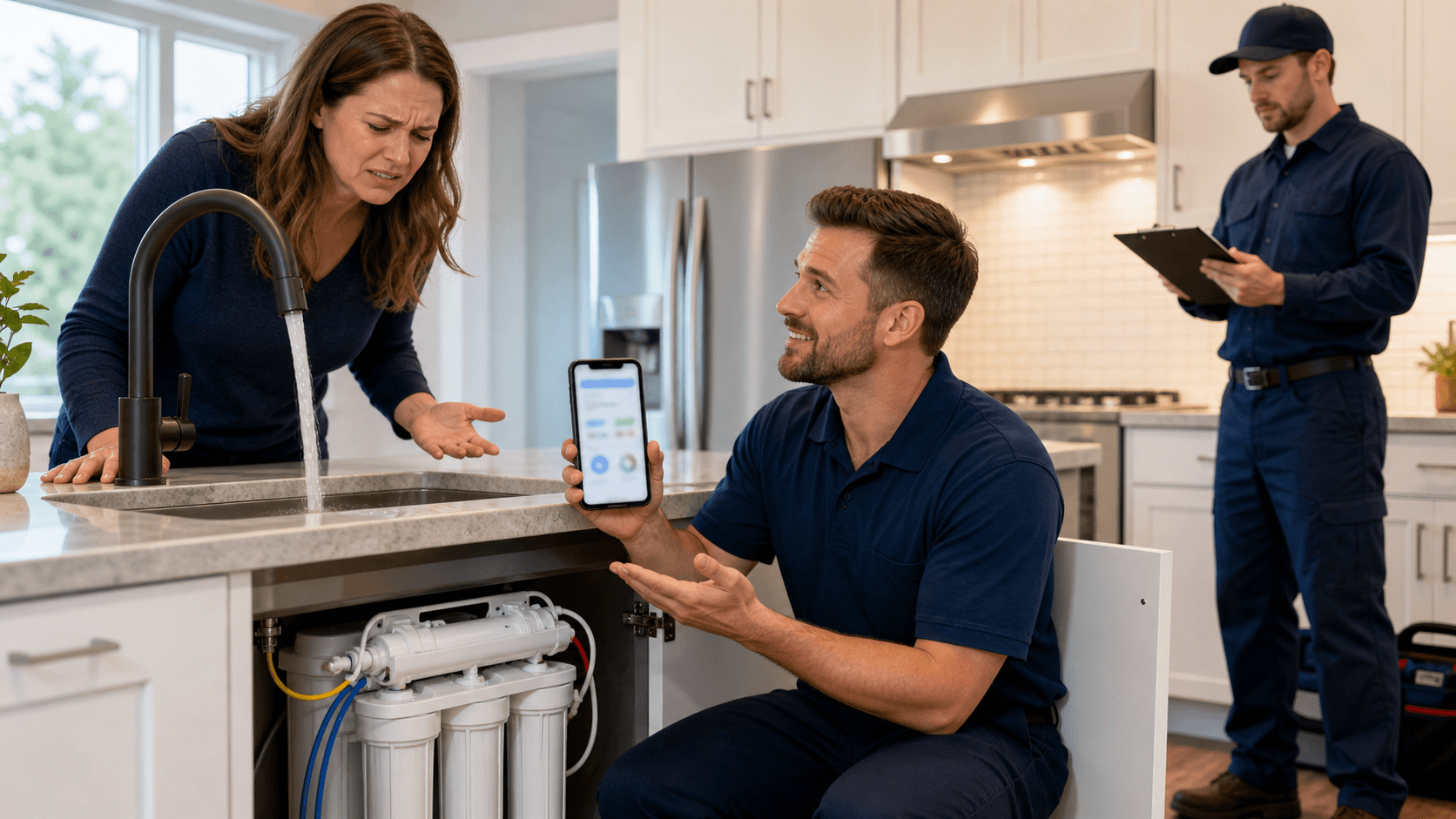
Your office team might be slammed, short-staffed, or taking vacation. That is where AI answering for plumbing leads shines. A system tuned for water softeners, reverse osmosis, well treatment, and whole-home filtration can listen for key phrases and guide the caller toward a booked visit instead of a vague promise of a call back.
Generic home service bots treat every call the same. A focused system for U.S. plumbing companies that really care about filtration jobs can:
- Ask the right water questions
- Recognize high-value opportunities
- Hand off tricky or emotional calls to your live staff
The goal is simple: more booked filtration estimates and higher average tickets from the calls you are already getting.
Compliance First for AI Answering
Before we talk scripts and routing, we have to talk protection. You need to stay inside U.S. rules and keep your brand safe.
At a minimum, make sure your AI answering setup covers:
- Call recording disclosures that match your state rules
- Respect for TCPA and Do Not Call lists
- Clear consent for collecting personal and water-related information
Your AI should stay firmly in "office assistant" mode. That means:
- No diagnosing health issues
- No promises about specific contaminant removal
- No design decisions about system size or exact setup
The AI can ask questions and book visits, but final recommendations should go back to licensed pros in your company. You also want clear, written scripts and rules before you turn anything on:
- Approved greetings, disclosures, and FAQs
- Escalation triggers, such as angry tone or health panic
- Consent language for texts and follow-up calls
- Policies for how AI data flows into your CRM and marketing tools
This keeps everyone on the same page and cuts down on risk.
Building Smart Call Flows That Actually Book Filtration Jobs
Now let us build a call flow that turns "My water tastes funny" into "You are on the schedule."
A basic water filtration AI call flow should hit:
- Greeting and disclosure
- Location and service area check
- Water source: city water or private well
- Main concerns: taste, odor, staining, hardness, rust, news stories
- Decision-maker and timing
- Clear next step: in-home visit or call from a pro
In practice, it might sound like this:
- Warm greeting that uses your company name
- Quick note if the call is recorded
- "Can I grab your zip code to make sure we serve your area?"
- "Are you on city water, or do you have a private well?"
- "What is bugging you most about your water right now?"
From there, the AI separates true filtration prospects from low-intent callers. If someone says, "Just wanted a price over the phone," the AI can explain your process and offer a free or low-pressure in-home check, if that fits your model. If the caller mentions no water, sewage, or a leak, the AI flags it as an emergency and routes it to a live dispatcher.
To lock in more revenue, build your flow around clear next steps:
- Live booking into your calendar or dispatch system
- Automated reminders by SMS or email
- Pre-visit education about what will happen during the appointment
- Simple add-ons such as, "While we are there, would you like us to test for hardness and iron?"
You want the AI to behave like your best CSR on their best day, every day.
Plugging AI Into Dispatch, CRM, and Lead Tracking
AI answering only pays off if your team can see and use the info. The data should not live in a black box.
Your setup should send AI call details into your dispatch and CRM tools by:
- Creating or updating customer profiles
- Tagging "Water Filtration Interest" or similar
- Logging a short call summary with key complaints
- Attaching recordings and transcripts for your team to review
When an appointment is booked, your technician should see:
- Water source type
- Primary complaints (taste, odor, staining, scale, etc.)
- Home type or rough size if known
- Any mention of budget, skepticism, or interest in financing
That context can cut time on-site and help your tech walk in ready with the right testing kit, literature, and talking points.
Tie the whole thing back to your marketing. Use CRM tags and campaigns so you can see:
- Which SEO pages or Google Ads created water filtration calls
- Which calls turned into booked installs or maintenance plans
- Which channels send shoppers that never book
Over time, this helps you lean into what is working instead of guessing.
When AI Should Answer Live vs. When It Should Follow Up
Not every interaction should start with AI. Some should end with it.
Front-end AI answering works best for:
- After-hours and weekend calls
- Overflow when your office lines are full
- Simple filtration questions and repeat FAQs
Back-end AI follow-up shines when:
- A web form comes in and your team is busy
- A homeowner got an estimate for a softener but did not move forward
- You want to run seasonal check-ins about water taste or well issues
There are also times when a live human is the clear choice:
- Commercial accounts with multiple properties
- Angry customers or warranty disputes
- Situations where emotions are running high
AI answering for plumbing leads should not replace your whole office. It should catch what your people cannot, and clean up the follow-up they do not have time to chase.
Smart follow-up can quietly rescue a lot of lost jobs, like:
- Fast SMS replies to new leads with a link to book or a call offer
- Gentle check-ins on estimates that went cold
- Seasonal touches about summer taste and odor or pre-winter well treatment checks
Used this way, AI keeps your name in front of good prospects without annoying them.
Your Next 30 Days to an AI Filtration Answering Pilot
A good AI pilot does not have to take over your whole operation. Start small and focused.
Over the next month, you can:
- Pick one or two service areas and focus only on water filtration and treatment calls
- Write simple, clear scripts with your greetings, disclosures, and key questions
- Set up tags and fields in dispatch and CRM for filtration interest
- Choose a handful of metrics: booked filtration jobs, response time, and average ticket
Review transcripts daily at first:
- Questions the AI is not handling well
- Spots where callers sound confused or stuck
- Missed chances to book an in-home visit
Tighten your qualifying questions, tweak your escalation rules, and make sure anything technical gets routed to your licensed pros. Train the AI on the patterns from your most profitable filtration deals so it knows which callers should get priority. Over time, this becomes a real edge while other shops wait and watch.
Turn Missed Calls Into Booked Plumbing Jobs Today
If your phones are ringing after hours or during busy seasons, you are leaving real revenue on the table. At Dirty Water Customer Co., we help you capture those opportunities automatically with AI answering for plumbing leads that responds instantly, qualifies prospects, and books jobs on your calendar. We work with you to match your brand voice, common services, and service area so every caller gets accurate, helpful answers. Reach out today so we can start converting more of your calls into paying customers.