Turn Customer Questions Into Filtration Leads
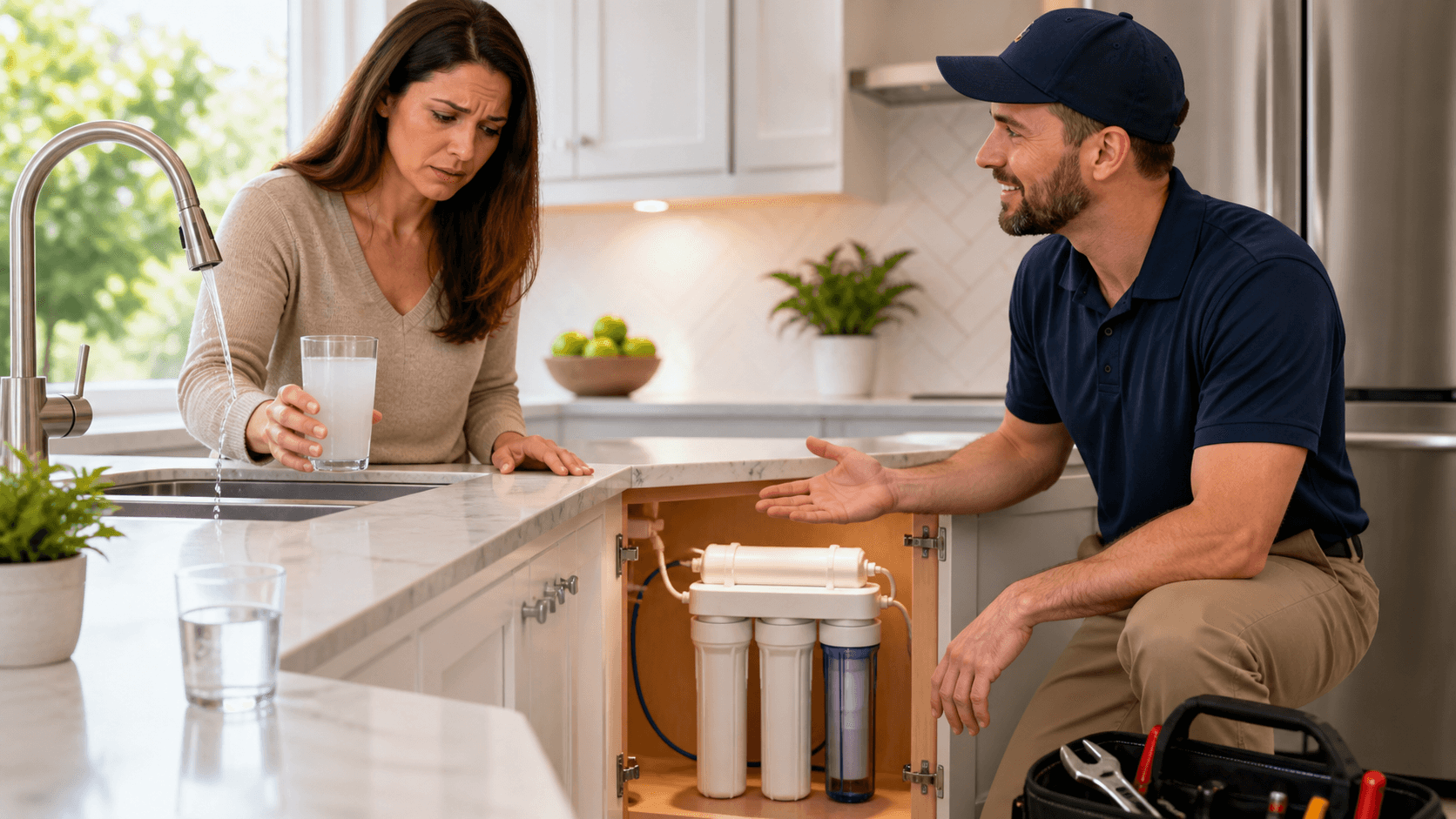
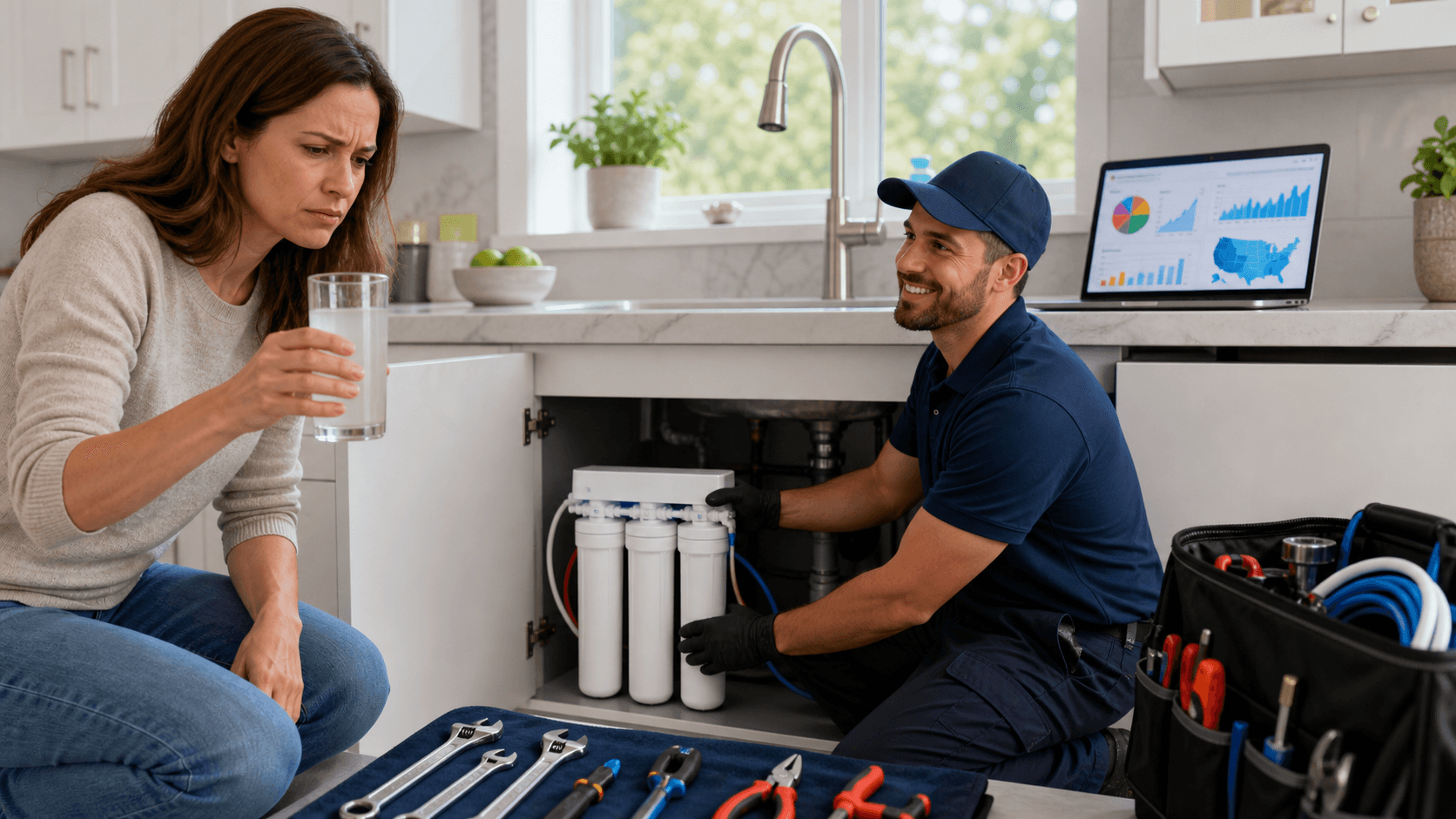
Homeowners almost never sit down and type "water filtration plumber" into Google. They type the problem they see or smell. Things like "white spots on dishes," "rotten egg smell in water," or "is my tap water safe for my baby?" That is how real people search.
If you want more plumbing SEO for water filtration installs, you have to speak that language. That means building content around real questions you hear every week on the phone and in the field. When we match those questions to the right system type, we turn random Google searches into booked filtration work.
In this article, we will walk through a simple, question-based SEO roadmap: how to build a question bank, connect it to RO systems, softeners, and whole-house filtration, wrap it with FAQ schema, and organize it into answer hubs that actually convert, especially during fall and pre-holiday season.
Build a Question Bank From Real Calls and Jobs
Your best SEO ideas are already sitting inside your business. They are in your call recordings, tech notes, estimates, and email replies. You do not need to guess what people search. You just need to collect what they already say.
Start by mining your own data. Listen for exact words customers use about taste, odor, staining, or health concerns. Do not "fix" their phrasing. The weird, messy phrases often match the way they search.
Good question buckets to pull from include:
- Drinking water quality: "Why does my water taste like metal?" "Is my tap water safe for coffee or baby formula?"
- Appliance and fixture protection: "How do I stop white spots on my dishes?" "Why is my shower glass cloudy?"
- Whole-home comfort: "Why does my water smell like sulfur?" "Why is my laundry looking dingy?"
- Well vs city water: "Is my well water safe to drink?" "Why did my water change after the city flushed lines?"
- Seasonal issues: "How do I get better water before family visits?" "We just bought a house, should we test the water?"
Once you have a list, turn those raw questions into SEO targets:
- Long-tail keywords: "why are there white spots on my dishes," "rotten egg smell in shower water"
- Page titles: "White Spots On Dishes? What It Means And How To Fix It"
- Headings: "Is A Water Softener Or RO Better For Hard Water Spots?"
Keep it local. Work in city names and neighborhoods where it feels natural, like "hard water spots in Phoenix kitchen sinks," so search engines can connect your content to local intent.
Match Buyer Questions to RO, Softeners, and Whole-House
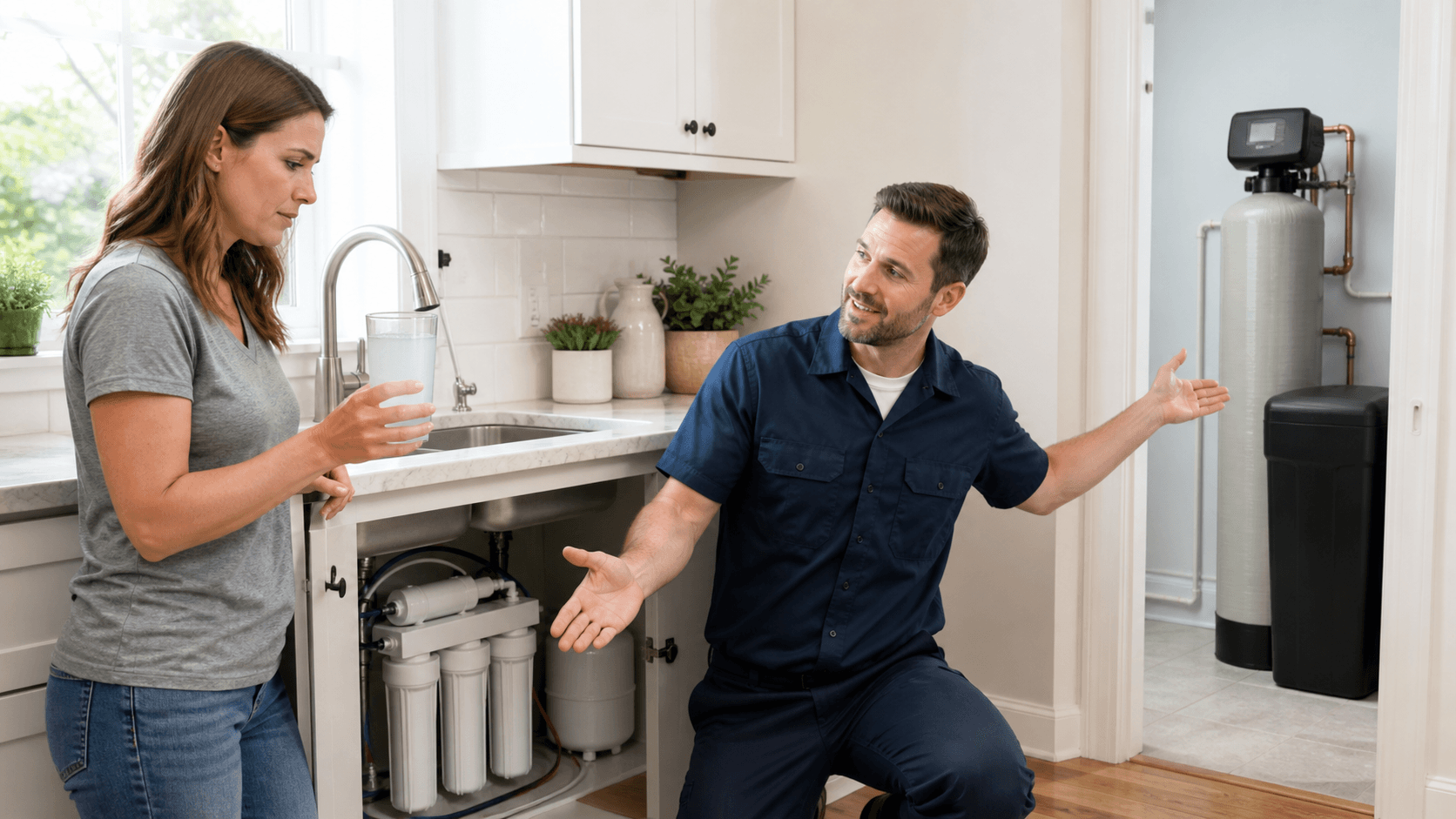
Now we connect each question to a type of system. This is where many plumbing companies miss out on higher-ticket filtration work. They answer questions but never guide the homeowner to the right solution.
Use a simple decision framework:
- Reverse osmosis (RO) signals: "funny taste," "better drinking water," "safer water for baby," "water for ice and coffee"
- Water softener signals: "spots on dishes," "scale on fixtures," "soap not lathering," "dry skin from hard water"
- Whole-house filtration signals: "rotten egg smell," "yellow or brown water," "problems at many fixtures," "well water concerns"
Build dedicated answer pages for each system type that start with the real problem. For example:
- "Why Are There White Spots On My Dishes?"
- "Why Does My Water Smell Like Rotten Eggs?"
- "Is Reverse Osmosis Safe For Babies And Pets?"
On each page, explain:
- What is causing the problem in simple terms
- When RO is the right fix
- When a softener solves it
- When whole-house filtration makes more sense
Use clear comparison charts like "RO vs Softener vs Whole-House" to help homeowners see the difference fast. The goal is to make you the local water filtration expert, not just "someone who installs whatever is on sale."
Turn FAQs Into Google Real Estate with Schema
FAQ schema sounds scary, but it is just a small bit of code that tells Google, "Hey, this page answers these exact questions." That can help you show up in rich results, People Also Ask boxes, and even some voice searches.
From your question bank, pick 5 to 10, high-intent questions for your key filtration landing pages. Good ones usually cover:
- What to expect during install
- How long systems last
- Basic maintenance needs
- Space and location questions
- Common worries like "Will my water pressure drop?"
Write short, plain-language answers right on the page. Then have your web team add FAQ schema behind the scenes so Google can read those Q&As in a structured way.
Keep a few rules in mind:
- Use different FAQs on different pages so you are not repeating the same list everywhere
- Include local context where it makes sense, like "common in our area because of hard water"
- Keep answers focused on the actual question, and save any offers or next steps for the regular page text, not inside the schema
Done right, your FAQs stop being a throwaway section at the bottom and start acting like little billboards across Google.
Build Conversion-Focused Answer Hubs, Not Blog Islands
Most plumbing sites have random blog posts floating around with no clear path. An answer hub is different. Think of it as a "Water Filtration Learning Center" that groups every question-based article and video by:
- Problem type (taste, odor, staining, health fears)
- System type (RO, softener, whole-house)
- Situation (new baby, new home, holiday guests, well water)
Map out the ideal user flow:
- Someone searches "rotten egg smell in shower water"
- They land on your specific question article
- The article explains causes and compares RO, softeners, and whole-house
- They see local proof like before-and-after photos or quick quotes from happy homeowners
- They get a clear offer, like a water test, inspection, or estimate
- Booking is simple with a short form and a phone number right up top
Strong hubs have:
- Phone and form above the fold on both desktop and mobile
- A clear "What to do next" section after the main explanation
- A simple quiz like "Is RO, A Softener, Or Whole-House Best For You?" to collect leads
- AI-powered follow-up that replies to form fills and chat messages within minutes, even after hours
We want visitors to move from "curious" to "scheduled" in as few clicks as possible, without feeling pushed.
Seasonal Playbook for Fall and Pre-Holiday Searches
October is prime time for plumbing SEO for water filtration. Weather cools down in many parts of the country. People start thinking about holiday guests, big family meals, and long hot showers. They also look at home upgrades before winter hits.
Tap into that mindset with seasonally tuned content mapped to filtration solutions. For example:
- "Is Your Water Guest-Ready For The Holidays?" leading into RO and whole-house options
- "Stop Embarrassing Odors Before Family Arrives" tied to whole-house filtration and well water fixes
- "Protect Your Water Heater Before Winter" linked to softeners that reduce scale and stress on equipment
Run short fall campaigns that connect:
- SEO content on your answer hub
- Email flows to past customers about water tests or filtration tune-ups
- Simple social posts that send people back to your best seasonal answer pages
Every piece should point to your answer hub, not random one-off blog posts. That way, traffic from October searches keeps working for you long after the holidays, feeding your filtration lead machine all year.
Turn Your Filtration Questions Into a Lead Machine
The whole system comes down to this: capture real customer questions, group them into clear buckets, match each one to RO, softeners, or whole-house solutions, wrap key pages with FAQ schema, and organize everything inside conversion-focused answer hubs.
You do not need to build it all at once. Pick one top problem area this month, like taste, odor, or staining. Build a small cluster of pages and FAQs around that theme, link them into your hub, and track how many calls and forms come from that content.
Over time, this turns random "why does my water smell" searches into steady, high-intent filtration work. At Dirty Water Customer Co., we focus on helping U.S.-based plumbing companies treat water filtration as a long-term, high-ticket growth channel, with SEO, inbound campaigns, conversion-focused sites, and AI follow-up tuned for how homeowners actually search and buy.
Get Started With Your Project Today
If you are ready to turn more filtration searches into booked jobs, let our team put a focused strategy to work for your business. We specialize in plumbing SEO for water filtration that helps you stand out in crowded local markets. At Dirty Water Customer Co., we build custom SEO campaigns around your services, service area, and growth goals. Reach out today so we can map out the next steps and start driving better leads to your business.