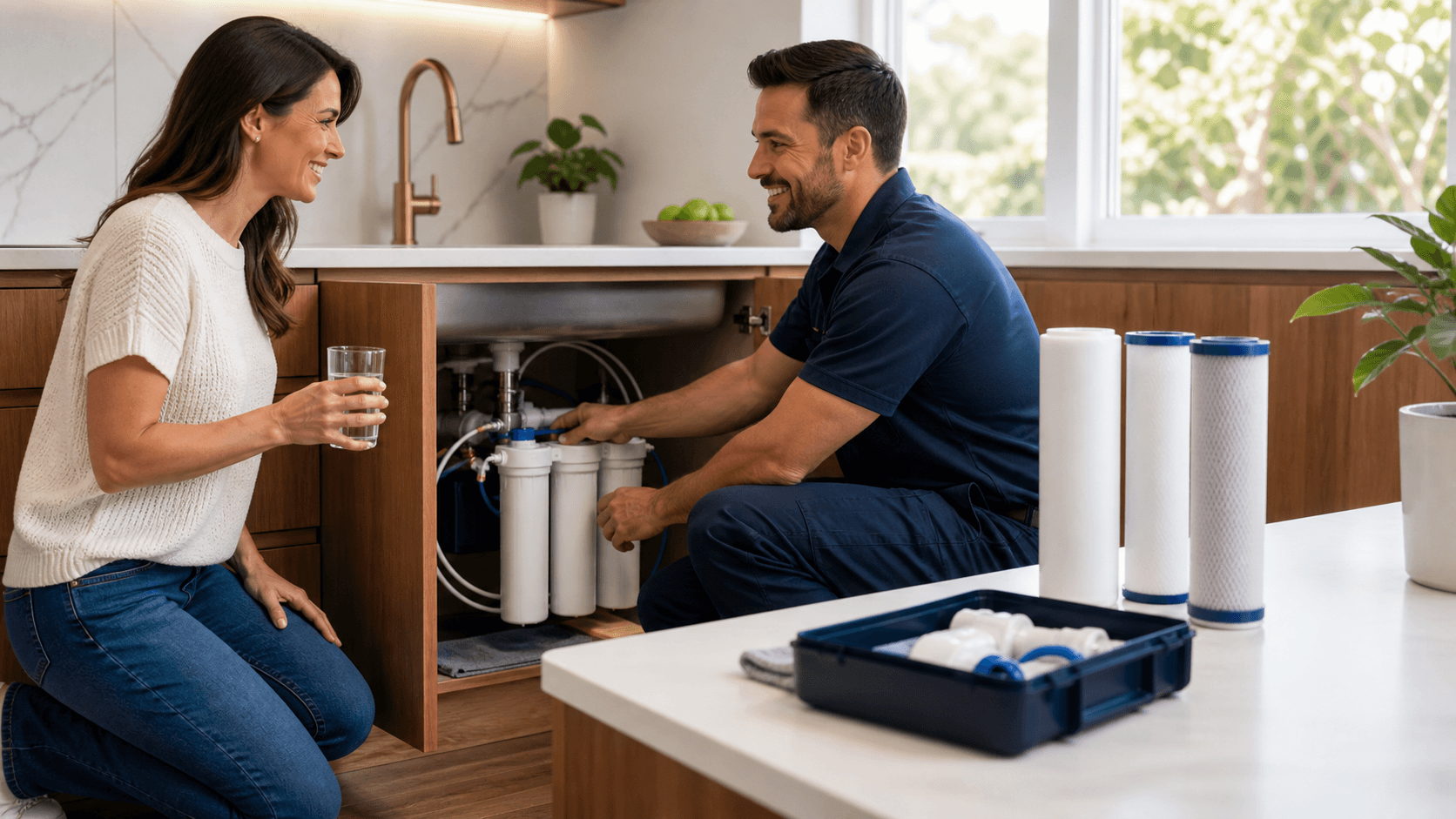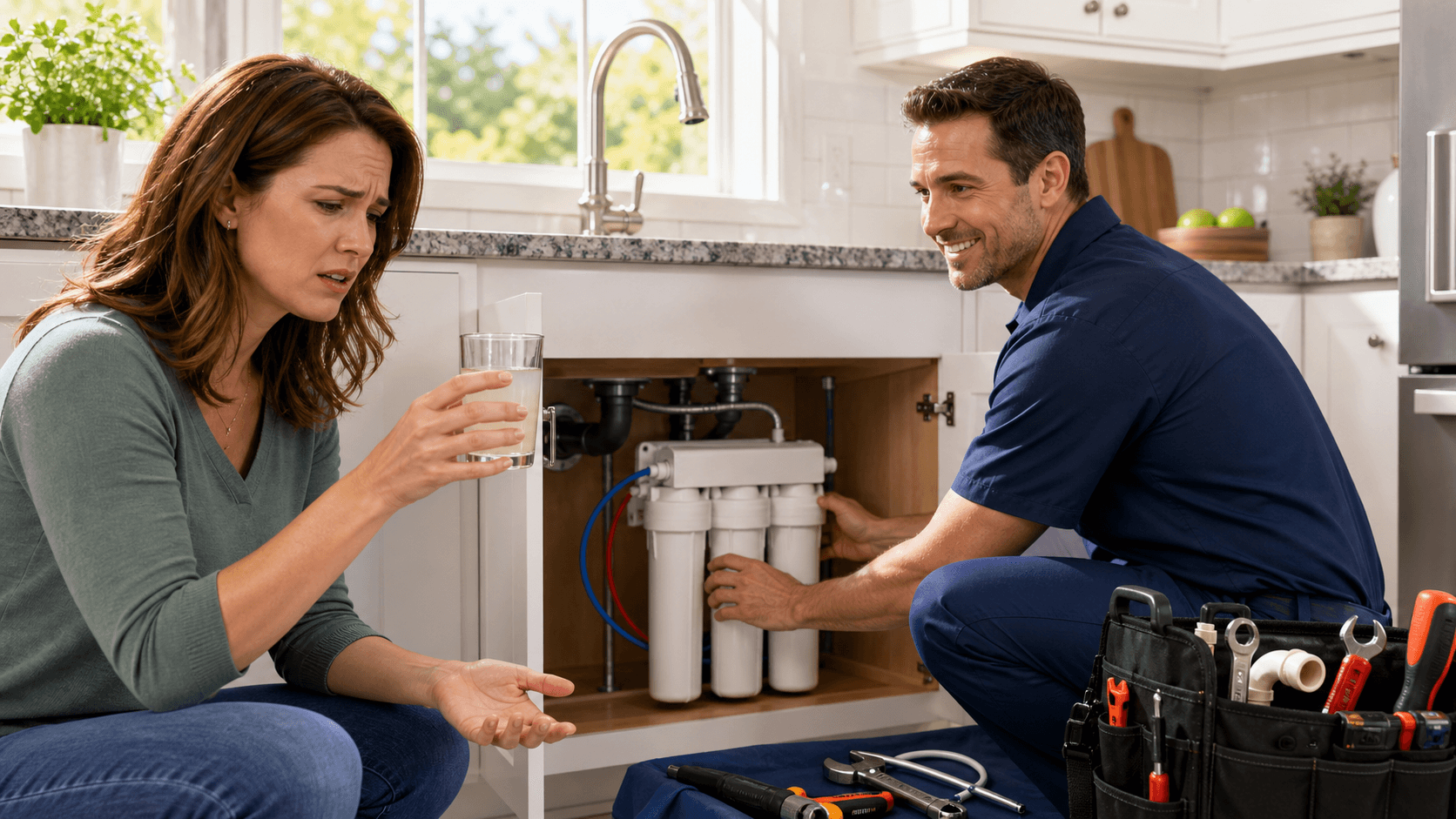
From Crisis Calls to Consistent Cash Flow
Most plumbing companies in the US live or die by emergency calls. One week the phones are blowing up with burst pipes, sewer backups, and no hot water, then the next week it feels like the phones went quiet. Summer heat and winter freezes keep things busy, but as soon as the weather evens out, revenue can drop fast.
There is a better way to smooth that roller coaster. Every time a customer complains about bad-tasting water, strong odors, staining on fixtures, or hard water spots, that is not just a nuisance call. It is a chance to design a planned water filtration or treatment job that fits your schedule and your pricing. In this article, we will talk about how to grow water treatment revenue for a plumbing company by shifting from a purely reactive model to a proactive clean water model, while still using the same trucks, techs, and service area you already have.
Instead of waiting for the next flood or frozen line, you can build a steady stream of higher-margin work that fills in the slow seasons. The goal is not to stop emergency work, but to stack water filtration on top of it so your calendar and income are more predictable all year.
Why Water Filtration Beats One-Off Emergencies
Emergency calls feel big in the moment, but they are often one-and-done. The customer is stressed, price-sensitive, and just wants the problem fixed fast. After that, they might not call again for years, or they might shop around next time.
Water filtration and treatment jobs work differently. When you solve water quality problems, you usually get:
- Higher average project size
- Recurring filter changes and maintenance visits
- Ongoing trust and long-term relationships
- More chances to help with other plumbing needs
Seasonal stability is another big win. When the weather-driven emergencies slow down in fall or spring, water quality concerns continue. Homeowners notice:
- Weird tastes or odors as cities change treatment levels
- Staining on sinks and tubs when mineral levels shift
- Hard water scale that gets worse over time
- Family health worries tied to what comes out of the tap
If your company is known as the local clean water expert, you become the first call for anything water-related in the home. That position makes it easier to cross-sell water heaters, fixture upgrades, repipes, and other services without feeling pushy. You are the trusted guide, not just the person who shows up when something bursts.
Turn Existing Plumbing Traffic Into Filtration Leads
You do not need brand-new customers to grow water treatment revenue for a plumbing company. You can start with the calls already on your board. The trick is training techs to spot water filtration opportunities during normal work.
Every visit is a chance to ask simple questions, like:
- How do you feel about the taste and smell of your water?
- Have you noticed staining, spots, or scale on fixtures or dishes?
- Are there any family health concerns around your water?
- Are you on city water or a well, and has anything changed lately?
From there, you can standardize the offer so it feels easy and natural. Give your techs a simple offer they can present, such as a Free Fall Water Quality Check or a Whole-Home Water Health Assessment. Back it up with:
- A short script so they know exactly what to say
- A one-page leave-behind that explains the benefits in plain language
- A few photos or simple diagrams that show common problems
The last piece is systematizing data capture. If a homeowner mentions bad taste, visible staining, or interest in better water, that should go into your CRM. Make sure techs note things like water source, age of equipment, and level of interest. That way, your office, marketing, and follow-up can focus on the hottest water treatment prospects, not cold lists.
Digital Marketing That Attracts High-Intent Water Leads
Your online presence should make it clear that you are more than an emergency plumbing company. Local SEO is a big part of that. Build dedicated service pages for water testing, softeners, filtration, and well treatment in each city you serve. Use the language your customers use so people searching for help can find you.
Education-focused content can do a lot of heavy lifting. Think simple, seasonal topics like:
- Why Your Water Tastes Different In Fall
- How Hard Water Beats Up Your Appliances
- Protect Your Home Before Winter With Better Water
- Signs Your Well Water Needs Professional Treatment
Short blog posts or quick videos help customers understand their problems and see you as the expert. You are teaching first, selling second.
Then make sure your website turns that interest into real leads. Every key page should have:
- Clear calls to action like Schedule a Free Water Quality Check
- Simple forms that work well on a phone
- Click-to-call buttons for people who want to talk right away
- Trust signals, such as reviews, before-and-after photos, and brand logos
When people who already care about water quality land on your site, it should be easy for them to raise their hand and say, I want better water.
Automate Follow-up and Simplify Sales for Your Team
Most plumbing offices are busy. Calls come in, techs run around town, and it is easy for good water leads to slip through the cracks. That is where AI-driven follow-up helps. Automated text and email sequences can:
- Respond instantly to new water filtration inquiries
- Send short, educational messages over a few days
- Offer times for estimates without waiting on office staff
- Keep the conversation going until the customer is ready
Segmentation makes this even more effective. Emergency plumbing leads should not get the same messages as water quality leads. For water treatment prospects, talk about health, taste, protecting fixtures, and long-term savings, not clogged drains or flooded basements.
You can also re-engage past customers with simple seasonal campaigns. Things like Fall Filter Check-Up or Get Softer Water Before Winter can bring back:
- Past emergency customers who never fixed their water quality
- Existing filtration customers who are due for service
- Homeowners who got a quote before but did not move forward
Once leads are coming in and follow-up is handled, your techs need a simple, repeatable in-home process. Keep it to three clear steps:
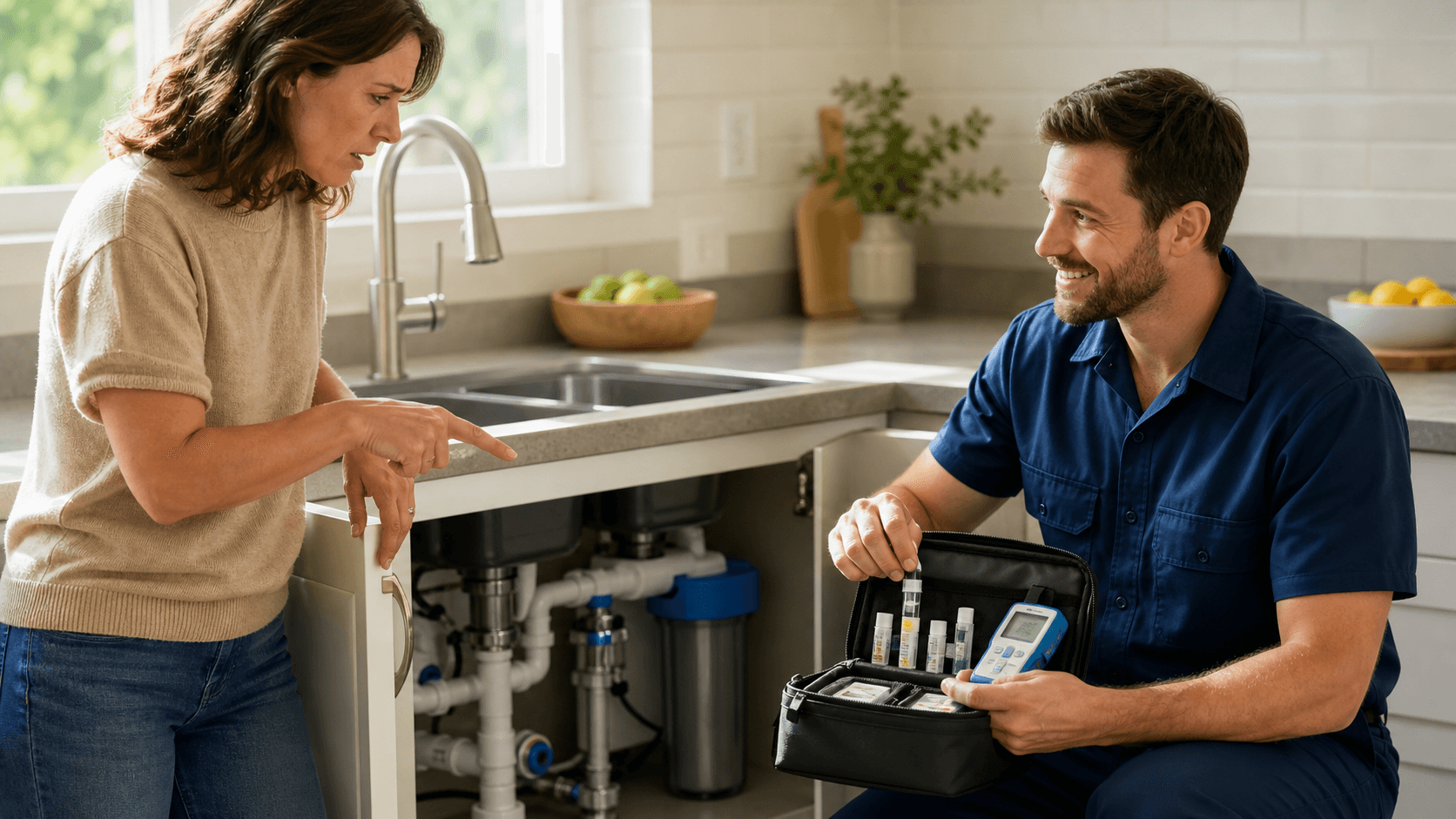
- Test the water with basic tools
- Explain the results in plain language, no jargon
- Present good-better-best filtration solutions
Pricing and financing should also be straightforward. Bundle installation, filters, and maintenance into options with monthly payments so it is easy to say yes. Track close rates and ticket sizes with simple dashboards. Then coach your techs based on real numbers, not guesses, so everyone knows what is working and what needs improvement.
Your Next 90 Days to Cleaner Water Revenue
The shift from emergency-only work to steady water filtration revenue does not have to be complicated. Over the next 90 days, focus on quick wins:
- Pick one main lead source, like SEO, paid ads, or your existing customer list
- Pick one core offer, such as a Free Water Quality Check
- Put one clear follow-up system in place so every lead is worked
Hold a Fall Kickoff meeting with your team. Explain why water filtration matters, how it stabilizes workloads and income, and what will change on each call. Give techs simple questions to ask, a clear offer to present, and a way to log water complaints in your systems. Train CSRs to listen for water quality issues on the phone and tag those leads differently.
At Dirty Water Customer Co., we focus on helping US-based plumbing businesses build profitable water filtration and treatment lines using targeted lead generation, SEO, high-converting websites, and AI follow-up systems. When you stop relying only on burst pipes and no-hot-water calls, and start building a clean water brand in your area, you can grow water treatment revenue for a plumbing company in a way that feels steady, planned, and far less stressful for you and your team.
Accelerate Your Plumbing Profits With Targeted Water Treatment Leads
If you are ready to turn more calls into high-value water treatment projects, we are here to help. At Dirty Water Customer Co., we use proven lead-generation systems to help you grow water treatment revenue for a plumbing company in a predictable, trackable way. Our team will work with you to align lead quality, volume, and service area so your techs stay busy with profitable jobs. Reach out today so we can map out the fastest path to stronger, more reliable revenue from water treatment services.