Is Website Design Holding Back Your Water Filtration Sales?
Your website can quietly make or break your water filtration sales. When someone in your area takes a sip of bad-tasting tap water in the middle of a hot summer, they grab their phone and start searching. If your site feels old, confusing, or generic, that homeowner is gone in seconds, even if you are the best plumber in town.
In this article, we will walk through how plumber website design for water filtration affects who calls you, who trusts you, and who passes you by. We will break down what filtration buyers really look for, what your site must show, and how to tweak your pages before late-summer demand hits its peak.
Your Website Might Be Costing You Filtration Jobs
Think about a busy summer week. Sprinklers are running, kids are home from school, and local news is talking about water quality and weird tastes. Your team is slammed with leaks and clogs. But water filtration calls? Barely a bump.
Most homeowners now judge a plumbing business in just a few seconds after they land on a site, especially for a bigger purchase like whole-home water filtration. If your site feels like it was built years ago, or it does not clearly explain your filtration services, people feel nervous. They back out and click the next plumber on the list.
A weak site can hurt you in quiet ways, such as:
- Homeowners not realizing you even offer filtration
- Visitors not finding a clear button to request a water test
- Couples not feeling confident enough to talk about a bigger install
Good news, though. You do not need a fancy, artsy site. You need a clear, trustworthy one built around how people actually shop for cleaner water.
Why Filtration Buyers Judge Your Site Differently
Emergency plumbing customers act fast. When a pipe bursts, they just want someone who can show up soon. Water filtration shoppers move slower and pay closer attention.
Here is how they tend to behave:
- They compare several local plumbing sites before they call
- They read more of the page, not just the header
- They often talk it over with a spouse or family member
They are not just buying a quick fix. They are thinking about long-term health, taste, and the feel of the water running through their home. They want to know that you understand what is going on in their city or region, not just plumbing in general.
That means your site needs to show you get local problems like:
- Hard water that leaves spots on dishes and scale on fixtures
- Iron that stains sinks and leaves that rusty ring
- Well water issues like sulfur smells or cloudy water
- Concerns about newer contaminants like PFAS
A filtration customer is often worth more to your business over time than a one-off emergency call. You might handle the install, filter changes, system checks, and even add-on services down the road. That higher lifetime value is exactly why it makes sense to put extra effort into a premium-feeling water filtration experience on your website.
Must-Have Website Elements That Sell Water Filtration
If your filtration offer is buried under a generic "Services" page, you are leaving money on the table. Filtration needs its own spotlight.
Your site should have:
- A clear, dedicated water filtration page or section
- Simple explanations of different system types
- Local proof that your installs are working for real neighbors
On your filtration pages, talk about systems in everyday language. For example:
- Water softeners: great for hard water, fewer spots and scale
- Reverse osmosis: better-tasting drinking water at the sink or fridge
- Whole-home filters: cleaner water at every tap in the house
Explain who each option fits best, how long a typical install takes, and what kind of warranty or service plan a homeowner can expect. Keep it simple, but not vague.
Trust is everything here. Add:
- Before-and-after photos from real local installs
- Short case-style blurbs about problems solved, without naming people
- Reviews that mention taste, smell, stains, or local water tests
Then, make the next step obvious. At the top of the page, above the fold, add:
- "Schedule a Free Water Test" buttons
- "Get a Filtration Quote" options
- Simple forms that ask for only basic info
- Click-to-call buttons that work well on mobile
Right near those buttons, use a short line that calms people down, something like, "No-pressure visit, we simply test and explain your options."
Plumber Website Design for Water Filtration That Converts
Good plumber website design for water filtration does not need to be fancy. It just needs to feel clean, organized, and real.
On the visual side, focus on:
- A modern, uncluttered layout with easy-to-read text
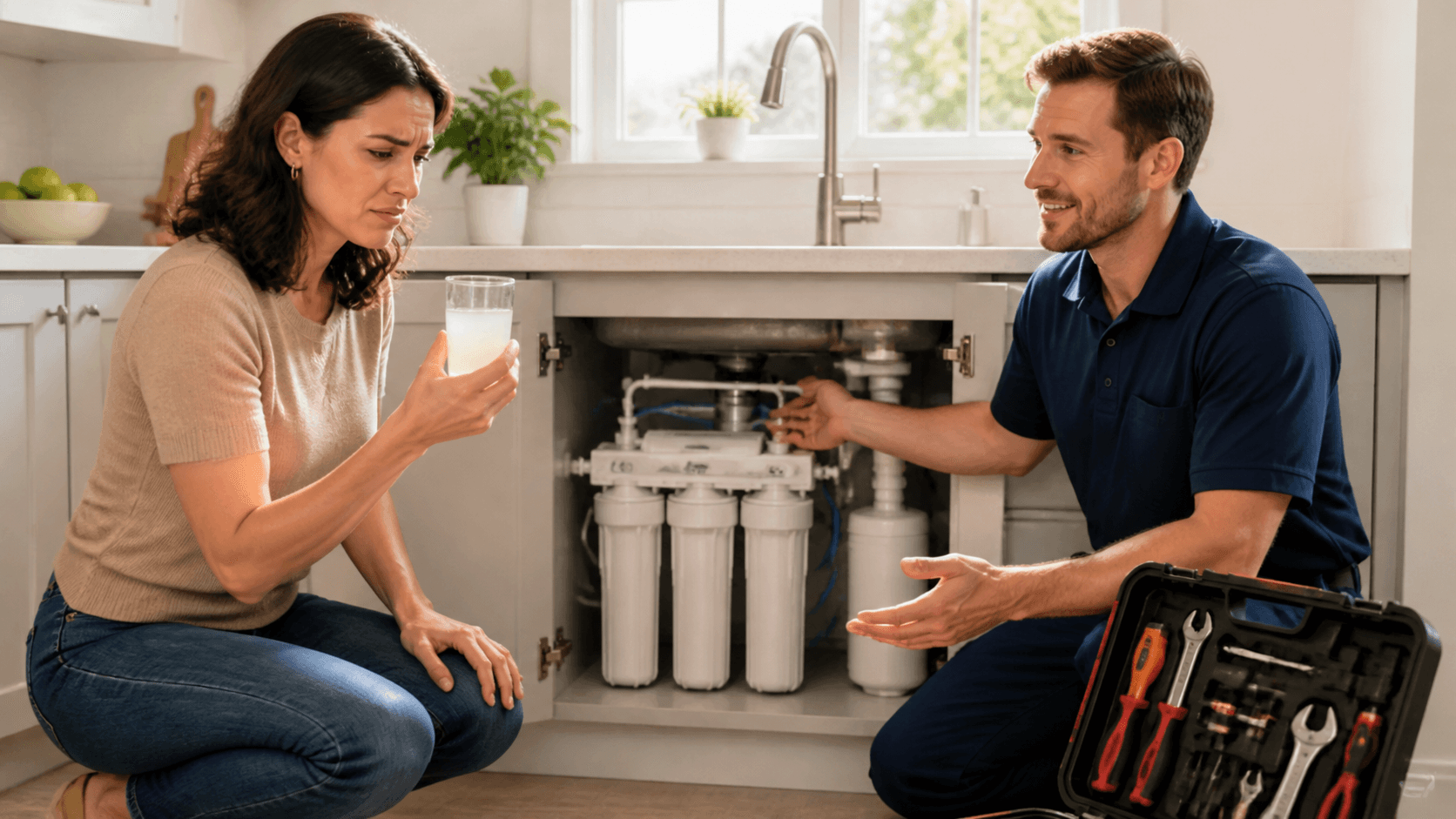
- Photos of real techs testing water in local homes
- Shots of neat, labeled filtration equipment, not messy pipe corners
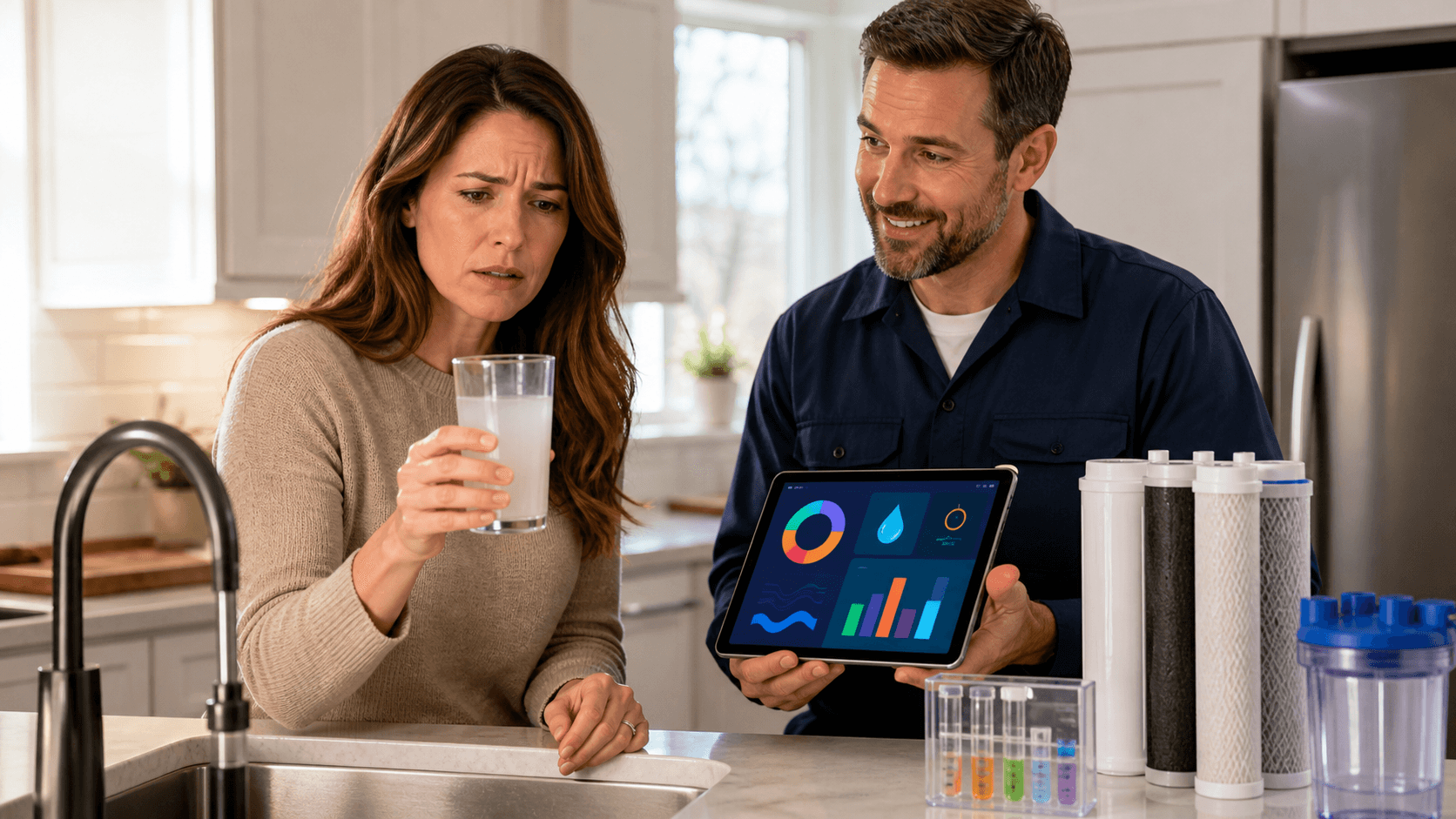
- Clear visuals that show a glass of untreated vs. treated water
Visitors should feel like they are seeing what the process really looks like, not random stock photos.
Your copy matters just as much. Skip heavy jargon and write like you talk with homeowners in the kitchen:
- Call out pain points: summer taste and odor issues, dry skin, white spots on glass, cloudy ice
- Answer worries: "Will this be a big hassle?" "Will I need to change filters all the time?"
- Give clear, simple expectations: what happens on the first visit, and what happens after the install
The layout of the page should guide people step by step:
- Do I have a problem?
Short checklist of common water issues so they can nod along.
- What are my options?
Plain-English overview of system types and what each one solves.
- Why choose this company?
Local focus, photos of your team, proof that you know the area's water.
- How do I get started?
Clear step-by-step of what happens when they book a water test or quote.
On every scroll, there should be a water-filtration-specific button or phone option, so they never have to hunt for it.
Turn More Web Traffic Into Summer Filtration Leads
You might already be investing in SEO, local ads, or social posts built around plumber website design for water filtration. But if people click through and land on a site that feels outdated, confusing, or like every other general plumbing page, your marketing dollars are leaking out the side.
A quick self-audit can open your eyes. Try this:
- Pull up your site on your phone, not your computer
- Pretend you just had a bad-tasting glass of tap water in August
- Start your timer and see how long it takes to find:
- A clear filtration page
- Local proof you know your area's water issues
- A simple way to request a water test or quote
If it takes more than a few moments, or if the path is not obvious, busy homeowners will not fight through the friction. They will back out, tap another plumber, and your chance at a long-term filtration customer is gone.
By tightening your water filtration pages, cleaning up your visuals, and simplifying how people raise their hand, you turn the traffic you already have into real, high-quality leads. At Dirty Water Customer Co., we focus on helping U.S.-based plumbing businesses do exactly that with targeted lead generation, SEO, high-conversion websites, and AI-powered follow-up systems built around water filtration growth.
Get Started With Your Project Today
If you are ready to turn more water filtration visitors into paying customers, we can help you plan the right strategy from the first click to the final call. Our team at Dirty Water Customer Co. builds tailored plumber website design for water filtration that highlights your expertise and makes it easy for homeowners to take action. Tell us about your goals, and we will map out a clear, practical roadmap to launch or upgrade your site. Reach out today so we can start building a web presence that supports your business growth month after month.