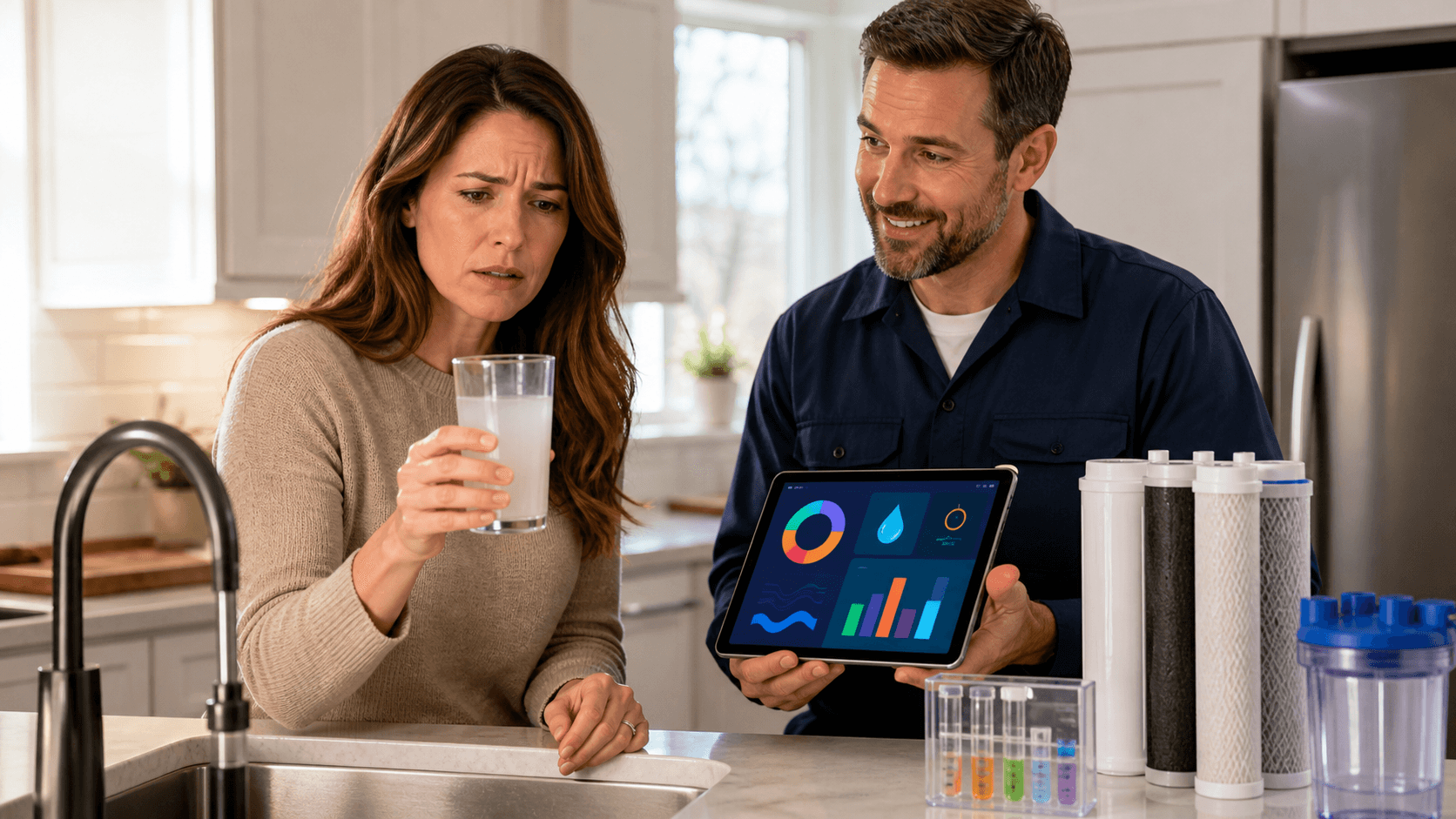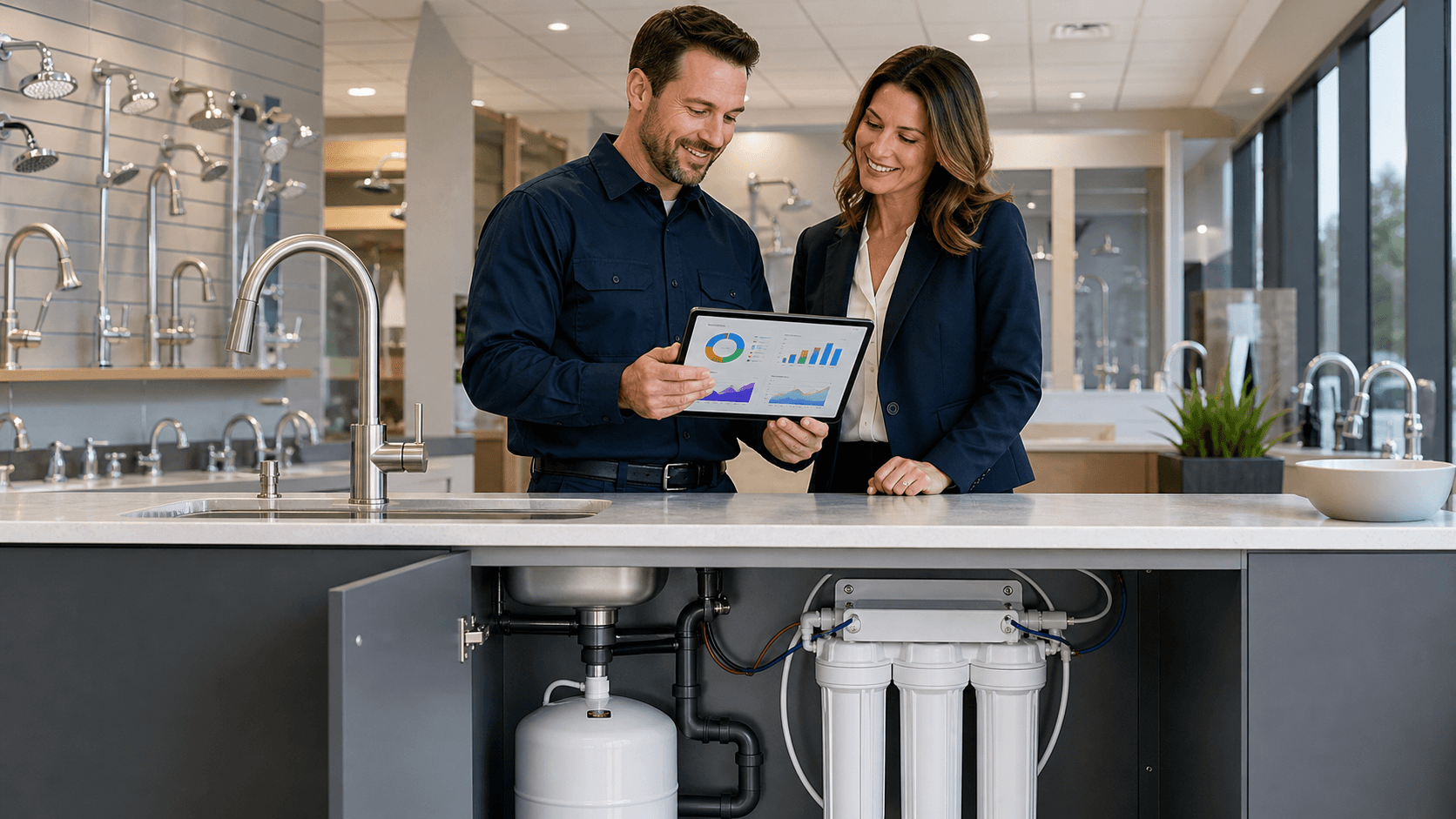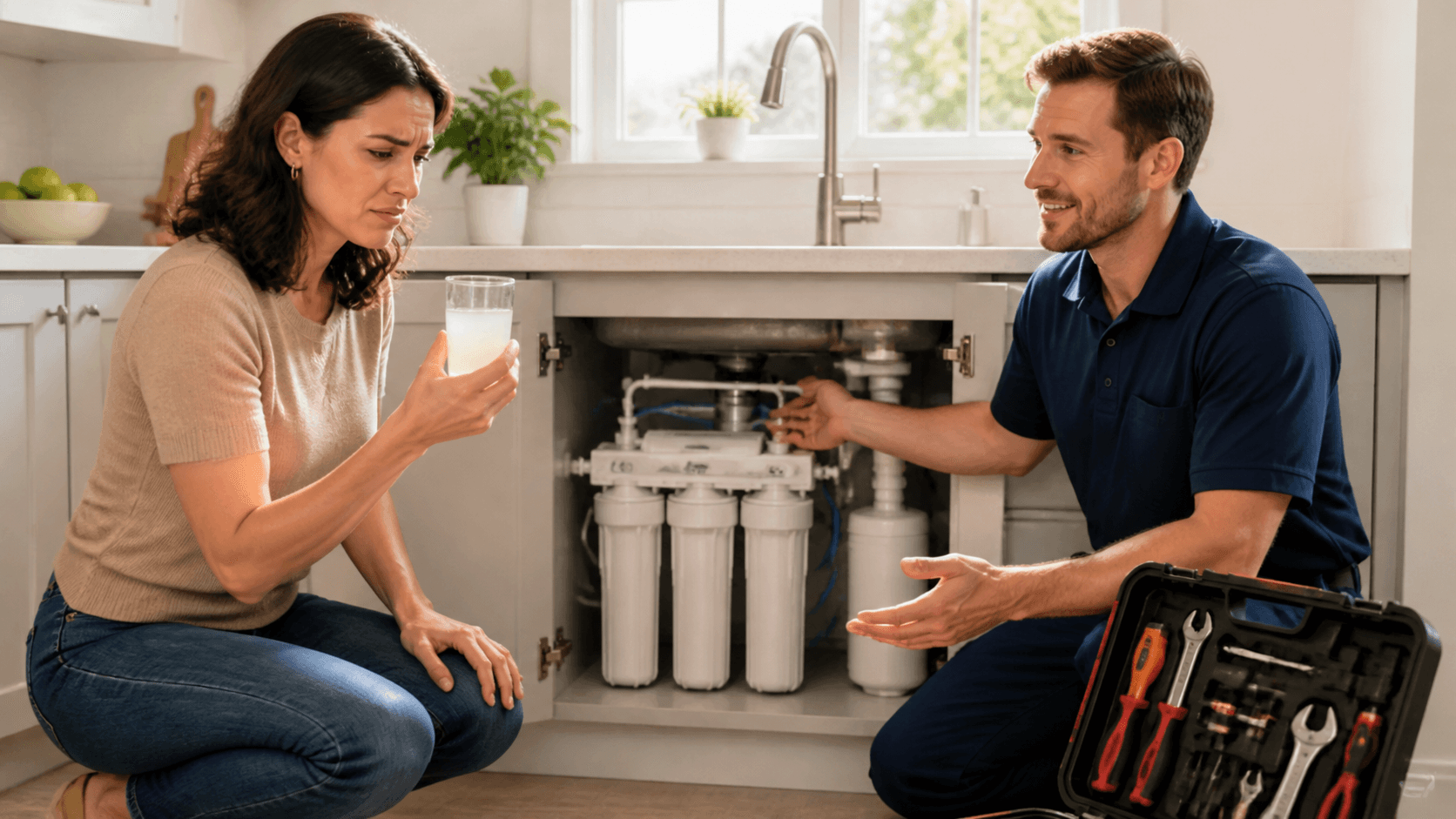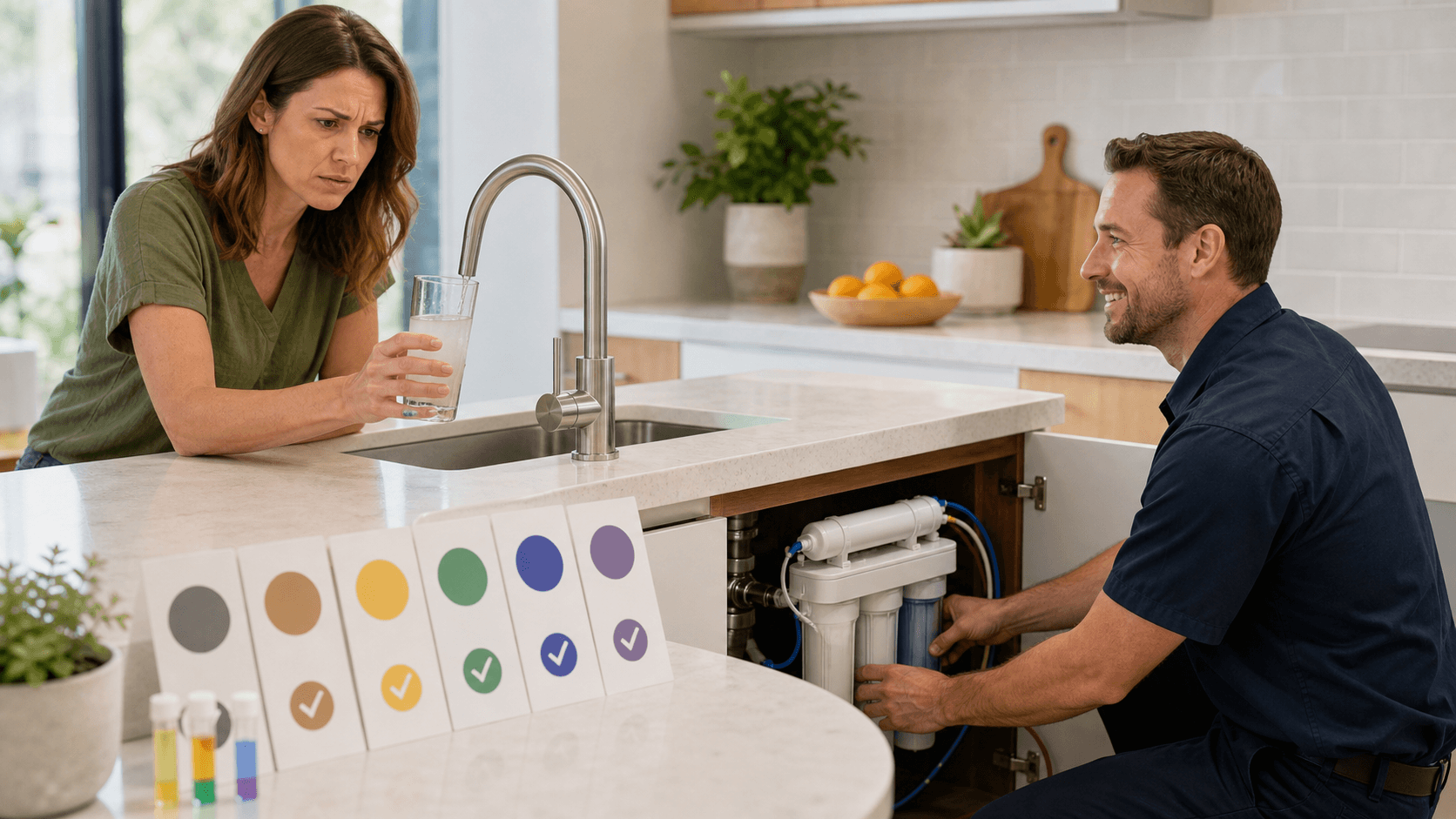
Turn Your Filtration Install Page Into a Lead Magnet
Most water filtration install pages on U.S. plumbing company websites read like a product sheet. A few brand logos, a short paragraph about "clean water," then a lonely phone number at the bottom. That kind of page does not sell installs; it just sits there. The pages that actually book installs and new filtration calls for your U.S. plumbing business are built around the real questions American homeowners ask before they commit.
Your goal is simple: turn your filtration page into a quiet sales rep that works every hour, without changing your whole site. When you lead with questions, you match the way people think. They do not wake up wanting a "whole-home filtration solution," they wake up wondering why the tap smells weird or the dishes look cloudy.
Late October is prime time for this for many U.S. markets. Families are inside more, cooking more, having guests over, and noticing every stain and smell in the water. If your water filtration install page is tuned now, it can feed your calendar through the holidays, through the cold months, and into early spring. Below, we will walk section by section, show you which questions to answer, where to test, and how this all fits into strong plumber website design for water filtration services that helps U.S.-based plumbing companies bring in more water filtration leads.
Build a Hero Section That Answers "Am I in the Right Place?"
The hero has one job: tell an American homeowner, in a few seconds, that your U.S. plumbing company solves their exact problem in their city or county, on a clear timeline. The core question is, "Can you fix my specific water problem here, and how fast?"
A simple hero formula that works for U.S. plumbing businesses:
- Headline: Problem + Outcome + Local U.S. proof
- Subheadline: Who you help + What you install
- Visual: Clean water, real tech, clear local service area
For example, a headline might focus on rusty or smelly water with a promise of clear, great-tasting water, paired with a note that you serve their metro area in the U.S. Keep the subheadline in plain language, like "We help local homeowners get clean, better-tasting water with pro-installed whole-home and under-sink filtration across your service area."
Right under that, add a tiny 3-step process tailored to how you run your U.S. plumbing operation:
- Step 1: Free water check or phone consult
- Step 2: System recommendation
- Step 3: Fast, clean install
Now test it. A few simple A/B test ideas for your hero:
- Problem-first headline vs outcome-first headline
- Short instant quote form in the hero vs a single, bold "Schedule Water Test" style button
- City- or region-specific problem language for local U.S. traffic vs general "bad-tasting water" phrasing for broader visitors
Stack Trust by Answering "Why Should I Believe You?"
Once they know they are in the right place, the next question is, "Why trust this U.S. plumber with my water?" Most plumbing sites lean on generic trust badges only. For filtration, you want proof that your company actually knows water treatment, not just drains.
Make this section answer, "How do I know you are not guessing?" Some good ways to do that for a U.S.-based plumbing business:
- Show filtration-focused training or certifications where you can (for example, from U.S. manufacturers or U.S.-based training organizations)
- Mention water treatment knowledge, not just general plumbing
- Use short stories in your reviews that name common local water problems
Keep reviews tight and specific. A sentence about fixing "rotten egg smell" or "white film on shower glass" is more believable than a long, vague quote about "great service."
Next, talk about risk in question form. Homeowners are thinking:
- What if I hate the taste?
- What if the system breaks?
- Will this unit even fit in my small space?
Answer those right in the copy. For example, offer a simple promise to adjust or fine-tune the system if they are not happy with the taste, and clearly mention parts and labor coverage if you offer it under your U.S. warranties. Before and after photos can carry a lot of weight here. Label them with questions like "What does a whole-home system look like in a tight utility room?" so they feel personal and practical.
You can test where this lives on the page for your market:
- Reviews directly under the hero vs after the process section
- One main case-style story vs a grid of short quotes
- A short video testimonial vs a written review with a photo
When you give trust its own, filtration-specific space in your plumber website design for water filtration, it stands out far more than a generic "our services" strip and helps your U.S. plumbing brand feel like the local filtration expert.
Map Out Your Process to Answer "What Happens Next?"
The next big worry is the process. People worry about mess, delay, and surprises. Their quiet question is, "What is this going to be like at my house?"
Break it into 3 to 5 simple steps that reflect how your U.S. plumbing company actually operates:
- Step 1: Free water test or phone consult
- Step 2: Clear recommendation, explained in normal terms
- Step 3: Install day with timing
- Step 4: Follow-up and filter change reminders if you offer them
Turn each step into a question. For example:
- What happens during my free water test?
- How long will my water be shut off?
- Will you need to cut into walls or cabinets?
- Do I need a permit in my city or county?
Keep answers short and calm. Mention that most installs are done in a set part of the day, that you protect floors, and that you clean up before you leave. As temps drop in colder U.S. climates, add cold-weather questions, like "Do you still install in freezing weather?" or "How do you protect pipes in winter?"
A few process layout tests to try on your site:
- Icons in a row vs a vertical timeline down the page
- Plain text vs a short explainer video walking through a real install
- A collapsed "View full process" box vs showing every step in the open
Make Pricing Answer "Can People Like Me Afford This?"
Money questions will either move the call forward or stop it. The big ones are, "What does this cost where I live?" and "How do I avoid being sold more than I need?"
If you do not want to post hard numbers, talk in plain ranges and situations that fit U.S. homes you serve. For example:
- Smaller homes on city water vs larger homes
- Homes on a well with heavy iron issues
- Under-sink drinking setups vs whole-home systems
Explain what changes price without jargon. Keep it simple:
- Home size and number of bathrooms
- Water quality and known local issues in your U.S. area
- System type like whole-home, under-sink, plus any add-ons
Turn these into Q&A blocks, such as:
- What does a typical whole-home filtration setup cost in my area?
- Is there a simpler option than a full system?
- Can I spread payments out over time?
For testing on your U.S. plumbing website:
- "Starting at" anchors vs only giving scenario-based ranges
- Big, clear financing notice vs a softer line that mentions plans
- A short quiz for a ballpark estimate vs a downloadable pricing guide that needs an email
Transparent pricing Q&A tends to pull in cost-shy visitors much better than a flat "Call for pricing" line, and helps generate more qualified water filtration leads for your company.
Use FAQs and CTAs to Match Real Buyer Questions
Your FAQ should not be random. It should target the exact objections that stop people from booking with your U.S. plumbing business. Think about what your office staff and techs hear all the time.
Group FAQs by theme:
- Health and safety: Does this remove things like chlorine or other common concerns? Is it safe for kids and pets?
- Installation: Will this hurt my water pressure? Will the system be loud? Will it fit in my space?
- Cost and ownership: How often do I change filters? What happens if I forget?
- Local and seasonal: Does my city water really need filtration? Will the system freeze in cold weather where I live?
Keep answers short and direct, and let your team link out or share supporting documents when needed. Test FAQ formats like a long scrolling list vs accordion-style questions that open and close. Try a small contact form right after the FAQ to catch people whose last question is not listed.
Now match your calls to action to where the buyer is mentally. Early on, they might want:
- Schedule a free water test
- Get a quick filtration recommendation
- See if you serve their address in the U.S.
Closer to a decision, they may respond better to:
- Book your install date
- Lock in fall or winter install timing
- Talk to a water filtration specialist today
You can test on your U.S. plumbing site:
- "Free water test" vs "Instant estimate" as your main button label
- One single CTA repeated vs a softer step first, like a quiz or guide, with booking later
- Sticky mobile bar with a tap-to-call or tap-to-schedule button vs only static buttons in the page body
When every section of your page points back to real homeowner questions, your filtration page stops acting like a static brochure. It becomes a simple, clear path from "My water is gross" to "My system is booked," which is exactly what plumbing business owners across the U.S. want from plumber website design for water filtration services that consistently brings in more water filtration leads.
Get Started With Your Project Today
If you are ready to turn more filtration inquiries into booked jobs, we are here to help you build a site that does the heavy lifting. Our team at Dirty Water Customer Co. specializes in plumber website design for water filtration that is tailored to your services, market, and goals. Share your project details with us so we can map out a clear, practical plan for your new site. Let's create a focused online presence that attracts better leads and turns your expertise into consistent revenue.