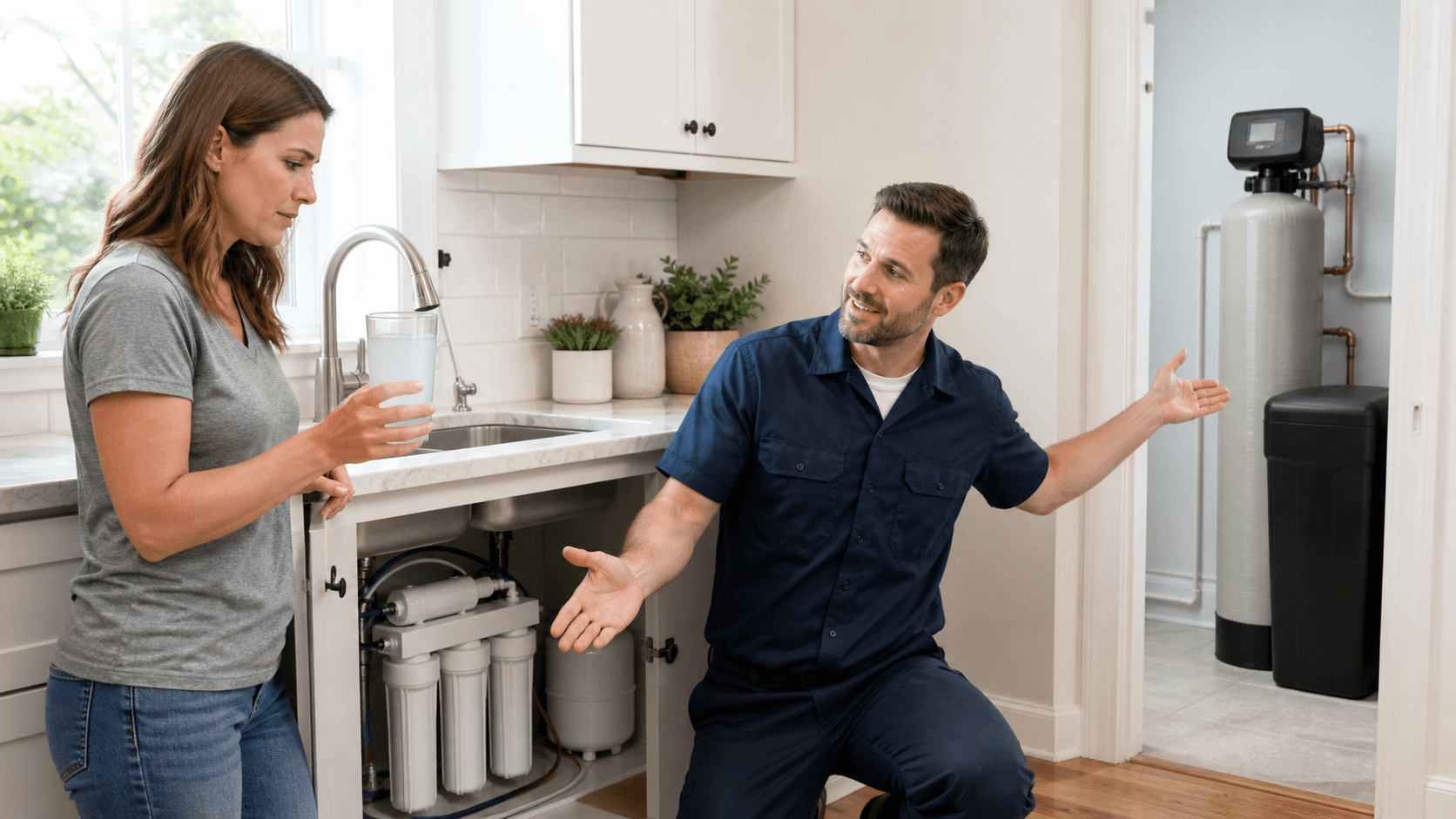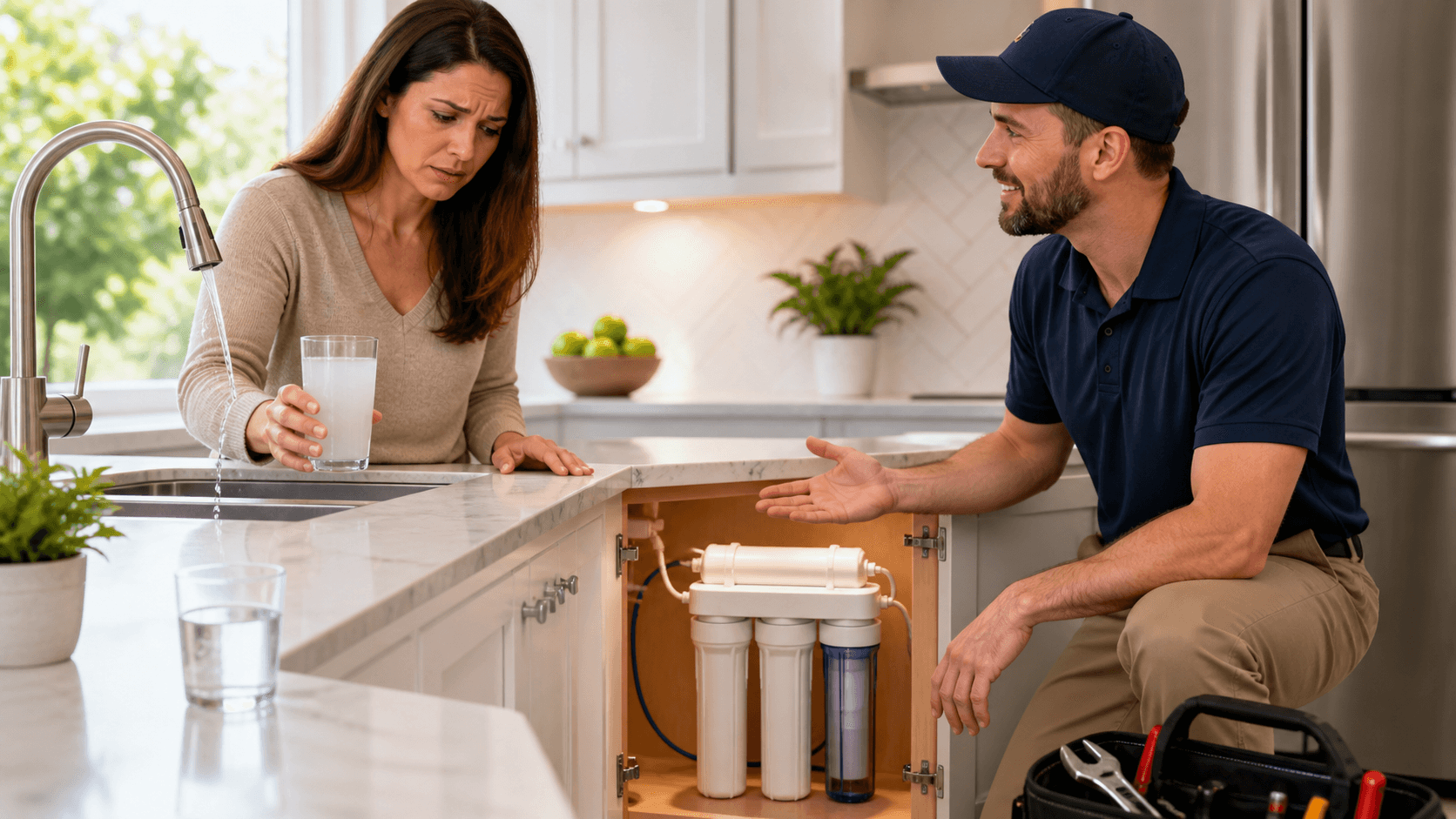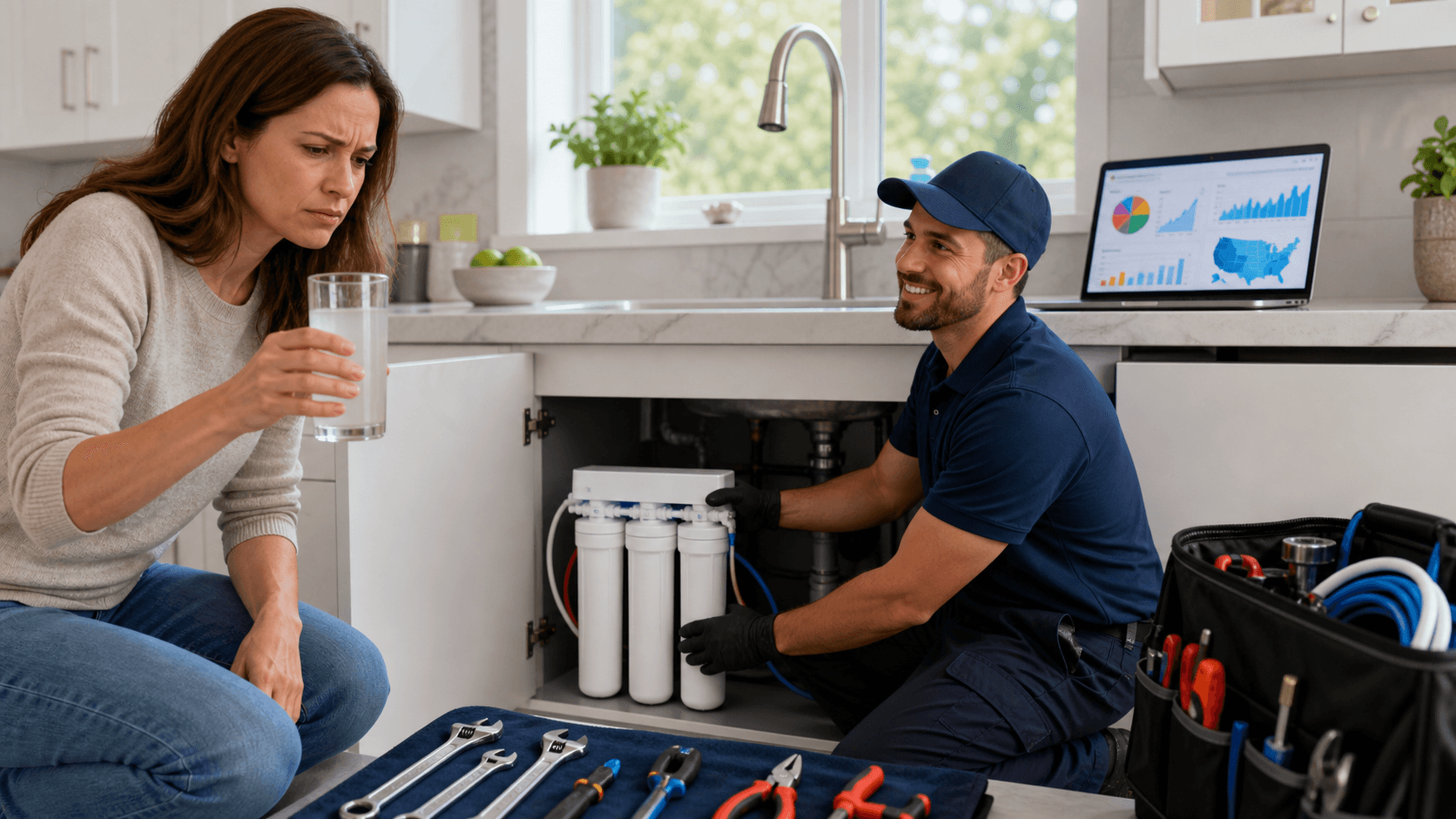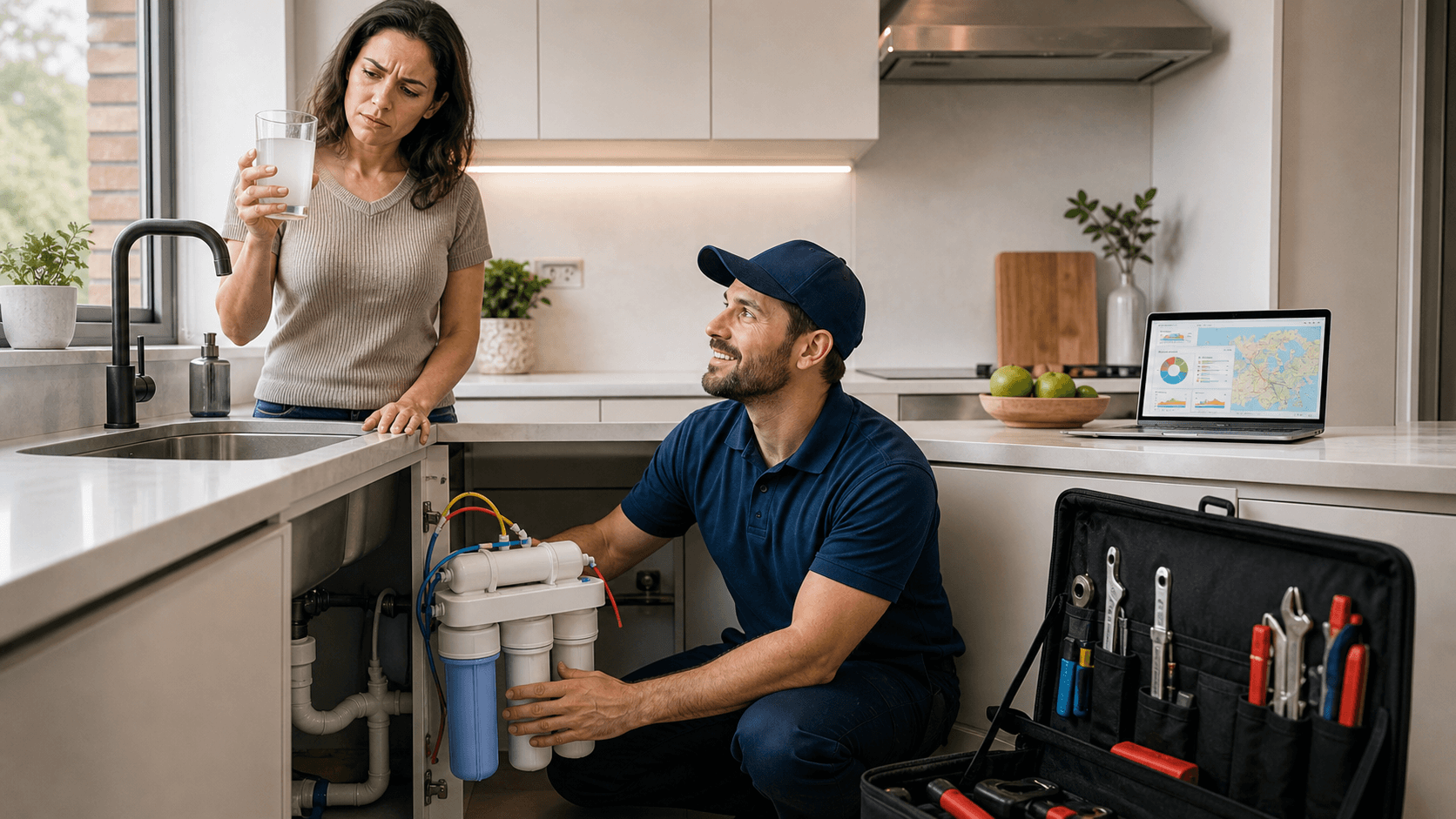
Summer is when water problems show up. People drink more, kids are in sprinklers, hoses run all day, and tap water tastes and smells different. Greater demand on the system makes hidden issues like chlorine taste, hard water spots, or low pressure easier to notice, so homeowners start searching for answers instead of waiting for an emergency.
If you own or run a plumbing business, this is prime time to turn your site into a water filtration lead engine. We are talking about moving past the usual "plumber" race and showing up for deeper search terms like "whole house water filtration cost," "well water filter options," and "salt-free vs softener." In this article, we will walk through how to use content-led SEO, like comparisons, calculators, FAQs, and citywide authority content, so you can pull in ready-to-buy filtration customers, not just last-minute clog calls.
Why Local Pack Rankings Are Not Enough for Water Filtration
Most plumbing SEO stops at the Local Pack. You get your Google Business Profile tuned up, build a few service pages for water heaters and drain cleaning, and hope to sit in the top three for your zip code. That can work for emergencies, but water filtration buyers behave differently.
People thinking about filtration usually:
- Search many times over weeks
- Compare different methods and brands
- Read long guides and how-to content
- Ask lots of "is this right for my home?" questions
Those searches often land on blog posts, comparison pages, and tools, not on map listings. If your content ends at "water filtration service" and a short blurb on it, you lose them to whoever actually answers their questions.
When you rank across your whole city for wider filtration topics, you build long-term visibility that is not tied to one area or one map pack. That cuts your need for constant paid ads and makes you the "water quality person" in your market, not just the "pipe person."
Build Comparison Content That Wins High-Intent Searches
Comparison content is where water filtration buyers tip from curious to serious. When someone types "reverse osmosis vs whole house carbon filter," they are not just browsing. They are trying to pick a lane.
Good comparison topics for plumbing SEO for water filtration include:
- Reverse osmosis vs whole house carbon filter
- Salt-based vs salt-free water softener
- Well water filter vs city water filter in your main metro
Structure these posts in a way that feels fair and simple. For each option, lay out:
- Pros and cons in plain language
- Best fit homes, like large families, rentals, or homes with well water
- Basic cost ranges and ongoing care, without getting too detailed
- Clear "this is when you should call a plumber instead of DIY" notes
Localization is where you win over national sites. If you are in a hard water area like Phoenix, say so. Talk about scale buildup in that city. If you work in places with iron-heavy well water or older plumbing, explain how that affects filter choice. Mention the system types you actually install, and always link from these posts over to your filtration service pages and booking options.
Use Calculators and Price Guides to Capture Ready Buyers
Interactive tools and simple cost guides are "money pages" for filtration. When someone wants a calculator, they are already picturing a system in their home. You are not pulling them up the funnel; you are walking them across the finish line.
Strong ideas for plumbing SEO for water filtration include:
- Whole House Water Filter Cost Calculator
- Monthly Cost of Bottled Water vs Filtration System
- Water Softener Maintenance Planner for Your Main City
Your calculator or guide should cover:
- Typical price ranges for systems you commonly install
- Labor ranges based on your region and home types
- Maintenance expectations like filter changes and basic service
- Sample scenarios for common US single-family homes
The point is not to give a perfect quote. It is to anchor expectations and move them toward a real visit. To convert that traffic into jobs, add:
- Clear calls to action like "Text us your results for a custom quote"
- Simple forms that ask for only what you truly need
- Live chat or AI chat that can answer follow-up questions
- Basic email or SMS follow-up that explains next steps and offers a home water test
Turn FAQs Into a Citywide Water Filtration Knowledge Hub
Your team already knows what people ask. Every phone call, service visit, and email has gold in it. Use those real questions as your FAQ roadmap.
Common topics usually include:
- Chlorine taste or odor from city water
- PFAS and other "forever chemicals" people see in the news
- Lead worries in older homes
- Hard water spots on dishes, glass, or fixtures
- Well water bacteria and discoloration
Build one master water filtration FAQ page that covers the big picture. Then, spin off individual FAQ posts around long-tail questions like "Do I need a whole house filter in Houston," "How often to change RO filters," or "Is softened water safe to drink."
Use each FAQ page in your sales process. Your plumbers can send links during estimates or after a visit. You can embed short video answers from your techs for key questions. With FAQ schema, you may also earn extra space in search results, which pushes your brand higher for filtration searches across your whole service area.
Build Citywide Topical Authority and Turn Content Into Installs
Topical authority simply means this: when someone in your city types any question about water quality, Google and real people both think of you first. To get there, you need a city-focused content plan, not just generic "what is a water filter" posts.
Think about:
- Neighborhood hard water overviews
- "Water Quality in [City] for Families" style guides
- "Best Water Filter Setup for Apartments in [City]"
- Seasonal content like "Summer Water Filtration Checklist for [City] Homes"
Support this with simple SEO basics. Internally link all your filtration posts back to your main water filtration service pages. Use consistent language around plumbing SEO for water filtration in titles and headings. Look for reasonable local backlinks from US-based partners like home inspectors, realtors, and local blogs that talk to the same homeowners you serve.
Then, connect this traffic to real installs. Inside your CRM or call tracking, tag any call, form, or booking that starts from a filtration page. Separate these from general plumbing leads so you can see how the new content line performs.
This is where AI-driven follow-up systems start to shine because many filtration leads are "not yet" buyers. Automated sequences can:
- Send them your comparison guides
- Answer common FAQs one by one
- Share basic financing or staged upgrade ideas
- Prompt them to book a home water test or in-home estimate when they are ready
Train your CSRs and techs to mention your calculators, guides, and FAQ pages on every call and visit. When homeowners see you have thought through their questions, they are far more likely to choose your company for the final install.
Make this the summer you dominate filtration leads by going beyond the Local Pack. With comparison content, smart calculators, deep FAQ libraries, and city-specific guides, you can turn your plumbing brand into the trusted water filtration authority across your whole market. Dirty Water Customer Co. focuses on helping US-based plumbing businesses do exactly that with targeted lead generation, SEO, strong websites, and AI-powered follow-up that turns curious clicks into booked, profitable filtration jobs.
Get More High-Intent Leads From Every Local Search
If you are ready to turn more filtration searches into booked jobs, our team at Dirty Water Customer Co. can help you build a strategy around plumbing SEO for water filtration that actually drives calls. We focus on practical steps that improve your visibility, strengthen your reputation, and attract customers who are already looking for the services you provide. Reach out today so we can review your current online presence and outline a clear, realistic plan to grow your leads.